
Recherche
View citations on Bioz

ChemiSorb Auto

Chimisorption essentielle, valeur ultime

ChemiSorb Auto sets a new standard in chemisorption:+/-1 % repeatability, ultra-low void volume and automated workflows. Stop compromising: only the ChemiSorb Auto delivers results no rival can match.

  • Engineered for consistent, reliable chemisorption results
  • Designed to maximize value without compromising performance
  • Intuitive operation and automation enable users of all experience levels to operate quickly and confidently

Vue d'ensemble

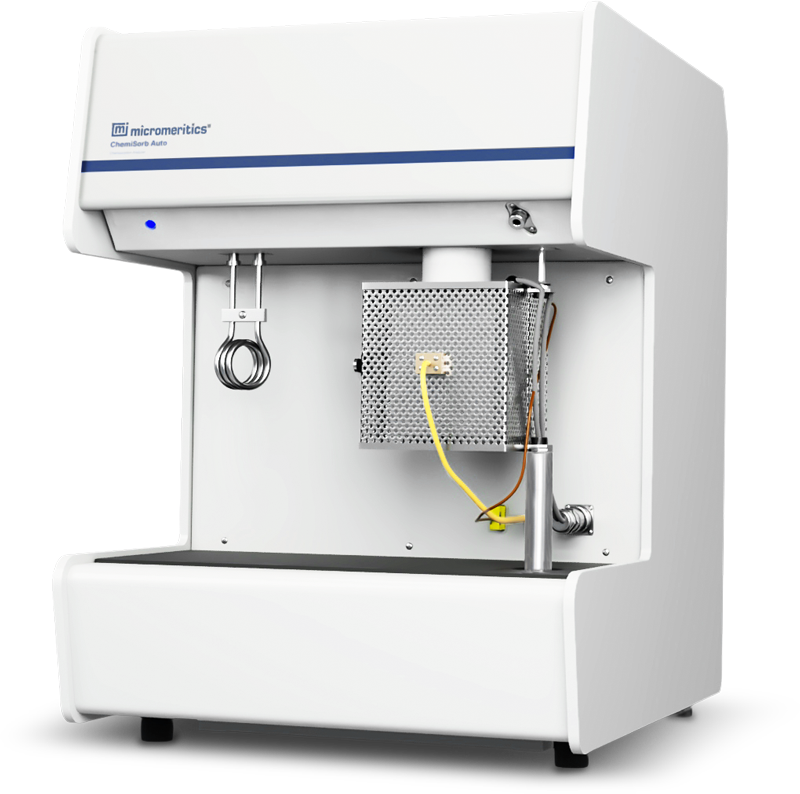
The Micromeritics ChemiSorb Auto is a compact, fully automated chemisorption analyzer designed to deliver high-precision, repeatable results for heterogeneous catalysts.

Whether you’re conducting temperature-programmed experiments or pulse chemisorption analyses, the ChemiSorb Auto offers reliable performance, affordable access, and unmatched ease of use – all in a benchtop footprint.

Caractéristiques

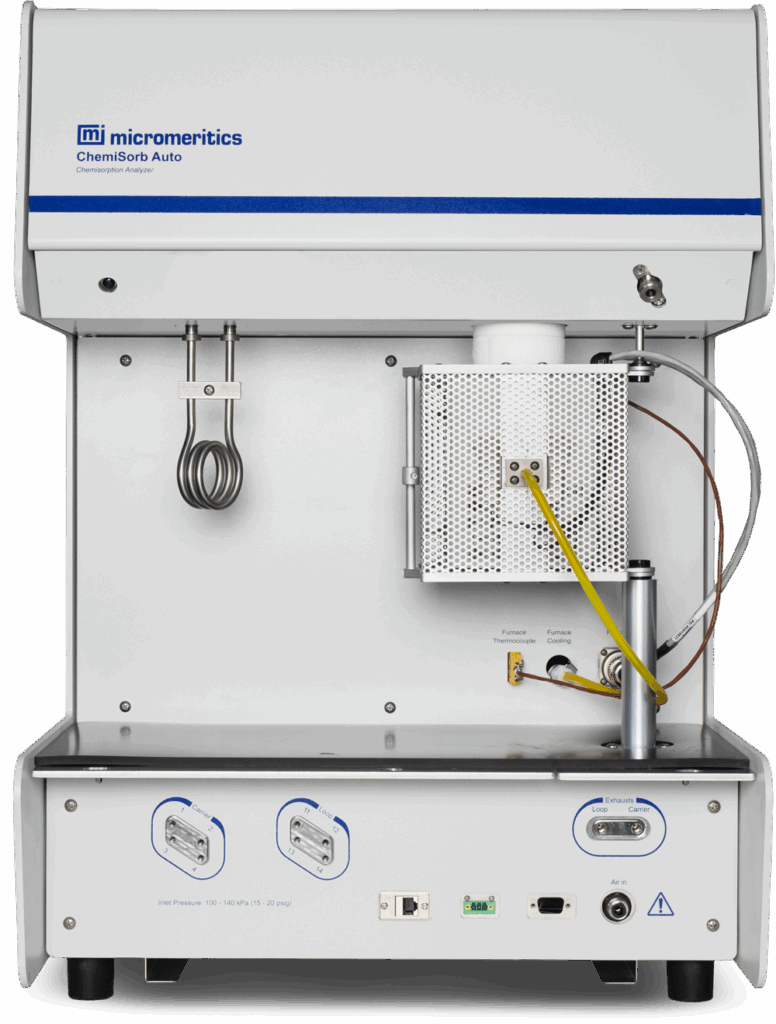
1

Loop Pressure Measurement

2

Patented Blending Valve

3

Minimal Internal Gas Volume

4

Highly Sensitive Linear Thermal
Conductivity Detector (TCD)

5

Forced Air Cooling

6

Dynamic Clamshell Furnace

7

8 Total Gas Inlets

1

Loop Pressure Measurement
Exact quantities of gas dosed to the
sample are known, ensuring repeatability within +/-1%.

2

Patented Blending Valve
Allows precise gas blending and
multi-point automatic gas calibrations.

3

Minimal Internal Gas Volume
Assures high resolution, fast detector
response, and reduces error when
calculating gas volumes.

4

Highly Sensitive Linear Thermal
Conductivity Detector (TCD)
Assures the calibration volume remains constant over the full range of peak amplitudes so the area under the peak is directly proportional to the volume of gas reacted.

5

Forced Air Cooling
Cools the furnace temperature rapidly down to near ambient (500°C to 50°C in 30 minutes), reducing analysis time and increasing throughput.

6

Dynamic Clamshell Furnace
Provides temperature control up to 1000°C and controlled heating from 1 to 100°C at a linear rate with minimal temperature overshoot.

7

8 Total Gas Inlets
Four each for carrier and loop gases fed to the system with two high-precision mass flow controllers.

8

3rd Party Safety Tested and Approved
CE Certified with NRTL marking and CB scheme validation, ensuring high quality and operator safety

Why ChemiSorb Auto?

Results no rival can match

ChemiSorb Auto is redefining routine chemisorption analysis with a compact, automated benchtop solution that delivers high-performance results—without the complexity or cost of traditional systems. Designed for labs that demand reliability and efficiency, ChemiSorb Auto empowers researchers in both academic and industrial settings to qualify catalysts and conduct TPx experiments with confidence.

Reliability you can trust

  • Delivers consistent performance for routine chemisorption analyses
  • Minimal dead volume ensures near-instantaneous detector response and repeatability within +/- 1 %
  • Ideal for TPR, TPD, TPO, and pulse chemisorption measurements

Simplicity that saves time

  • True unattended operation: load your sample, start the analysis, and walk away in under 5 minutes
  • Compact, benchtop design fits seamlessly into any lab environment
  • Powered by intuitive MicroActive software, making it easy for users of all experience levels to run experiments and analyze data

Affordability without compromise

The ChemiSorb Auto provides core chemisorption capabilities at a price point accessible to academic and industrial labs alike.

Chemisorption Catalyst Characterization

Chemisorption is a surface-specific process where adsorbate molecules undergo chemical reactions with solid surfaces, forming strong, often irreversible bonds through electron sharing. This high-energy interaction is essential for catalyst characterization, offering insights into activation temperatures, available surface metal, site strength, and performance across redox cycles. Available tests:
1

Réduction programmée de la température (RPT)

  • Catalyst activation behavior
  • Max reduction rate
  • Quantitative hydrogen consumption
2
Temperature Programmed Oxidation (TPO)
  • Evaluate catalyst regeneration
  • Characterize carbon deposits
  • Study redox properties
3
Désorption programmée en température (DPT)
  • Characterize acid and base sites
  • Chaleur d'adsorption isostérique
  • Evaluate binding affinity
4
Chimisorption par impulsion
  • Number of active sites
  • Metal dispersion
  • Active metallic surface area
  • Crystallite size

Software / Intuitive MicroActive

Move quickly from data to decision

Rapidly transition from experimental data to material characteristics with Micromeritics’ own MicroActive data analysis software.
Get all the answers you need with:

  • Interactive peak analysis including: limit selection, baseline definition, integration, and deconvolution
  • Built-in analysis models for pulse chemisorption, % dispersion, metal surface area, crystallite size, first order kinetics, heat of desorption, activation energy, BET surface area, and more
  • Intégration transparente des données de spectrométrie de masse
  • Rapports graphiques détaillés et configurables
  • Automatic file exporting for data management

Program what you envision, visualize what you have programmed

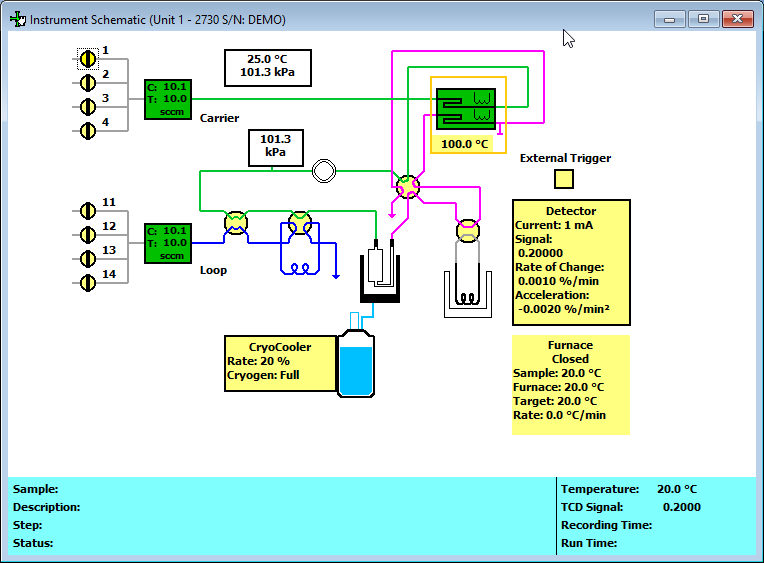
The new MicroActive method editor features an intuitive
process illustration that shows the programmed state of the
instrument at every step of the method so you can
see that your method matches your vision.

Automatic Gas Calibration

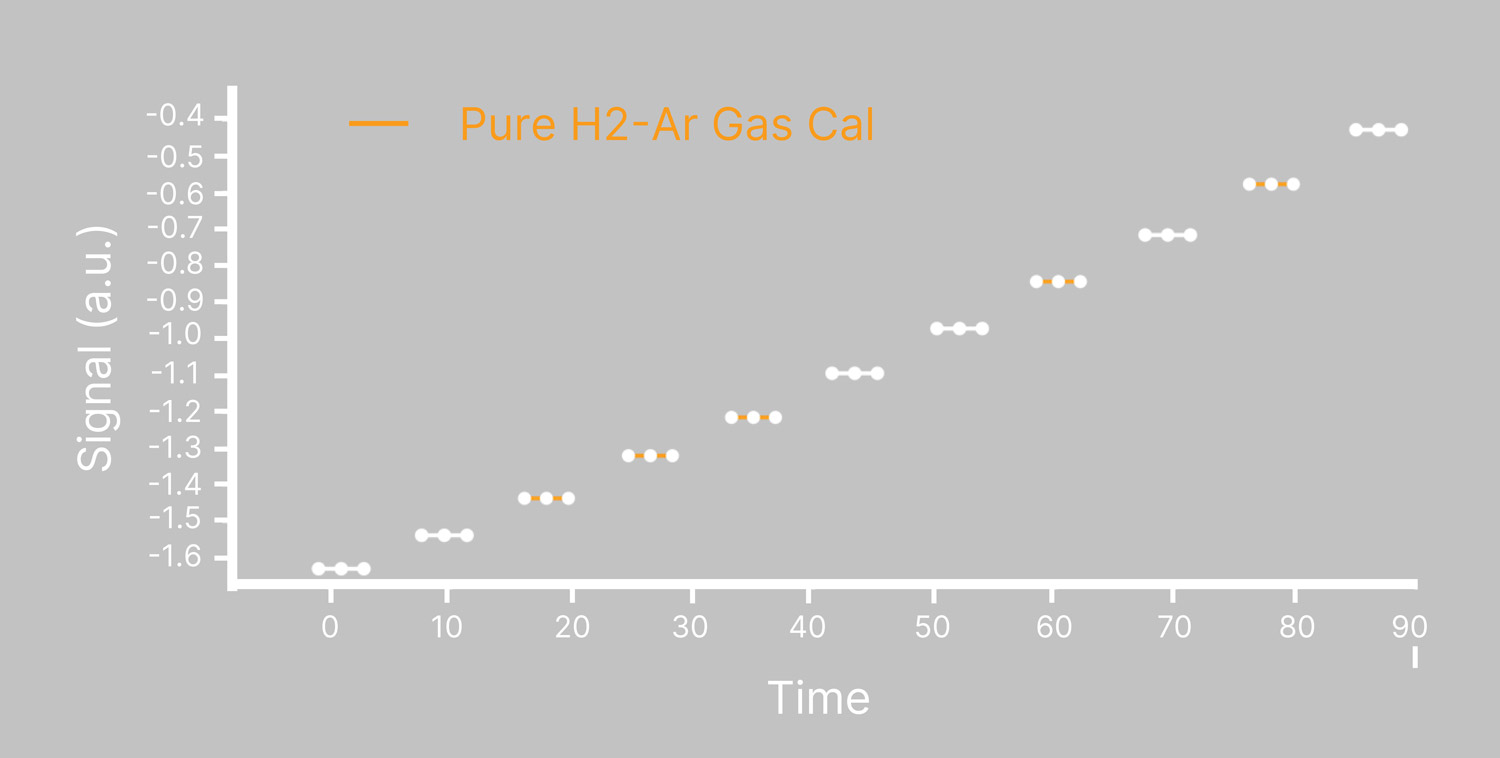
Determining the active gas concentration in the mixture with an automatic calibration procedure is a breeze. ChemiSorb Auto will automatically mix the inert gas feed from the carrier MFC with the active gas feed from the loop MFC via the patented blend valve. This is done in a stepwise function across a range of concentrations, allowing the user to apply the saved calibration to a variety of sample data sets. Linear and polynomial fits are applied to the curve with correlation coefficients >0.995.

compléter votre flux de travail

Accessoires

Applications

Hydrocracking (hydrodesulfurization and hydrodenitrogenation)

Hydrocracking (hydrodesulfurization and hydrodenitrogenation)

Les catalyseurs d'hydrocraquage sont généralement composés de sulfures métalliques (nickel, tungstène, cobalt et molybdène)....

+
Water-gas shift

Water-gas shift

The water gas shift reaction is an important element in the hydrogen...

+
Fischer-Tropsch synthesis

Fischer-Tropsch synthesis

Fischer–Tropsch synthesis converts syngas into sustainable fuels, with cobalt and iron catalysts...

+
Réforme

Réforme

Catalyseurs contenant du platine, du rhénium, de l'étain, etc. sur de la silice, de l'alumine ou de la silice-alumine...

+
Isomérisation

Isomérisation

Les catalyseurs tels que les zéolithes à petits pores (mordenite et ZSM-5) contenant des métaux nobles (typiquement...

+
Oxydation partielle

Oxydation partielle

Catalyseurs au manganèse, au cobalt, au bismuth, au fer, au cuivre et à l'argent utilisés pour...

+
Hydrogénation

Hydrogénation

Catalysts like palladium, nickel, and platinum rely on chemisorption to activate hydrogen...

+
Craquage catalytique

Craquage catalytique

Les catalyseurs acides tels que les zéolithes sont utilisés pour convertir les...

+

Capacités

Instrument Capabilities
Température

Ambient to 1000 °C
-100 °C to 1000 °C with CryoCooler

Taux de rampe de température

-100 °C to 400 °C: up to 100 °C/min
400 °C to 600 °C: up to 50 °C/min
600 °C to 800 °C: up to 25 °C/min
800 °C to 900 °C: up to 10 °C/min
900 °C to 1000 °C: up to 5 °C/min

Carrier Gases

4 inlets: H2, O2, He, Ar, H2/Ar, and more

Analysis (loop) Gases

4 inlets: He,H2, CO, O2, N2O, NH3/He, and more

Analysis Types

Pulse Chemisorption
Temperature-programmed reactions: TPR, TPO, TPD, TPSR
Strong Chemisorption: Reactive metal area, dispersion, crystallite size
Active site surface concentration
Reduction, Oxidation Temperatures
Acid site strength distribution: Lewis/Brønsted acid site distribution
Breakthrough Curve Measurement
Activation Energy

Optional Capabilities

Detection by Mass Spec
B.E.T. Surface Area

Les spécifications fournies étaient valables telles qu'elles étaient extraites des documents disponibles au moment de la publication. Ces spécifications peuvent être modifiées sans préavis et ne sont fournies qu'à titre de référence générale.

Demande d'information

Demandez un devis ou contactez un expert pour plus d'informations