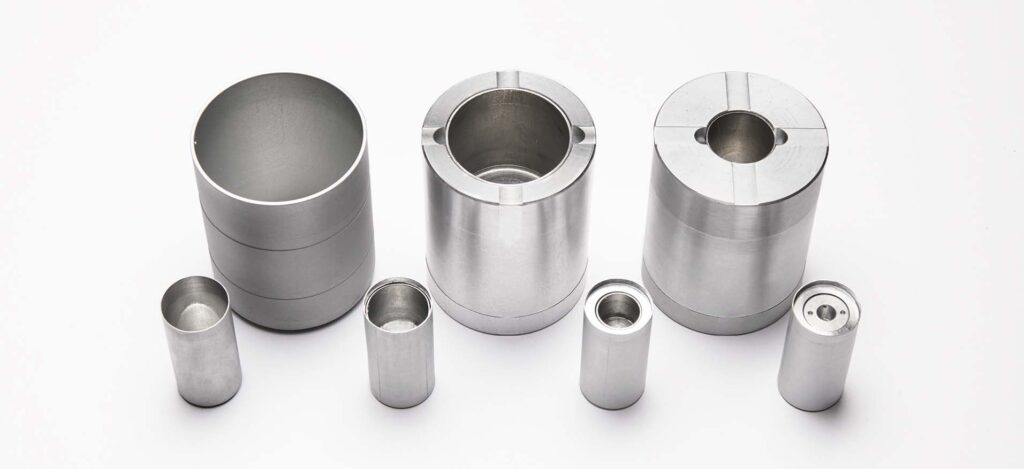
Volume insert kits
Ultimate volume flexibility


Fastest. Easiest. Most accurate.
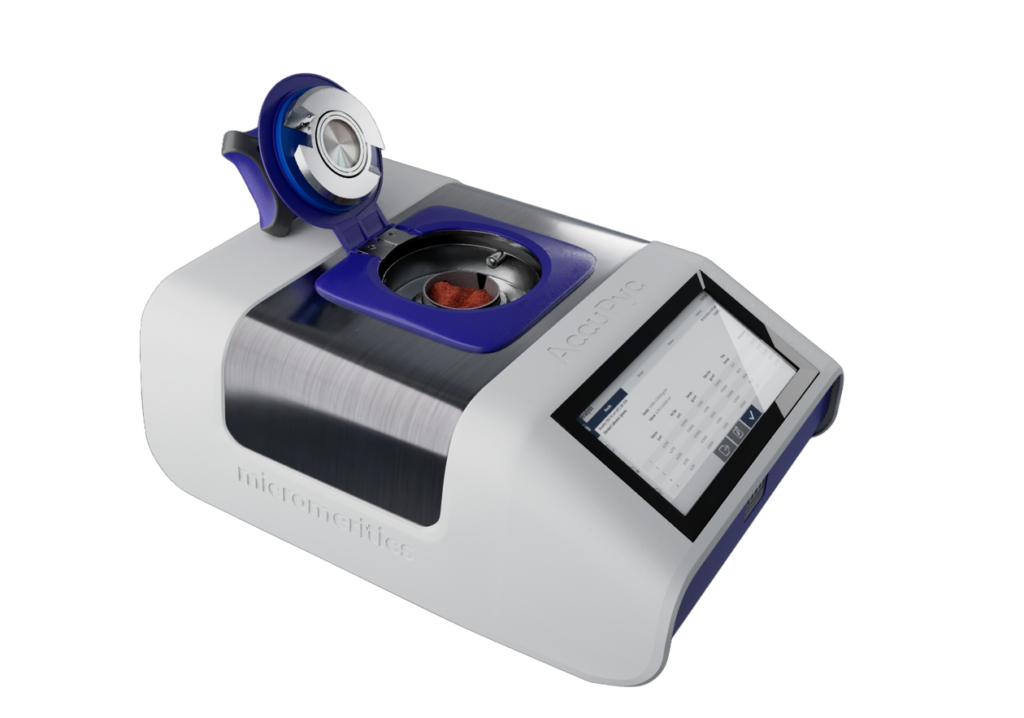
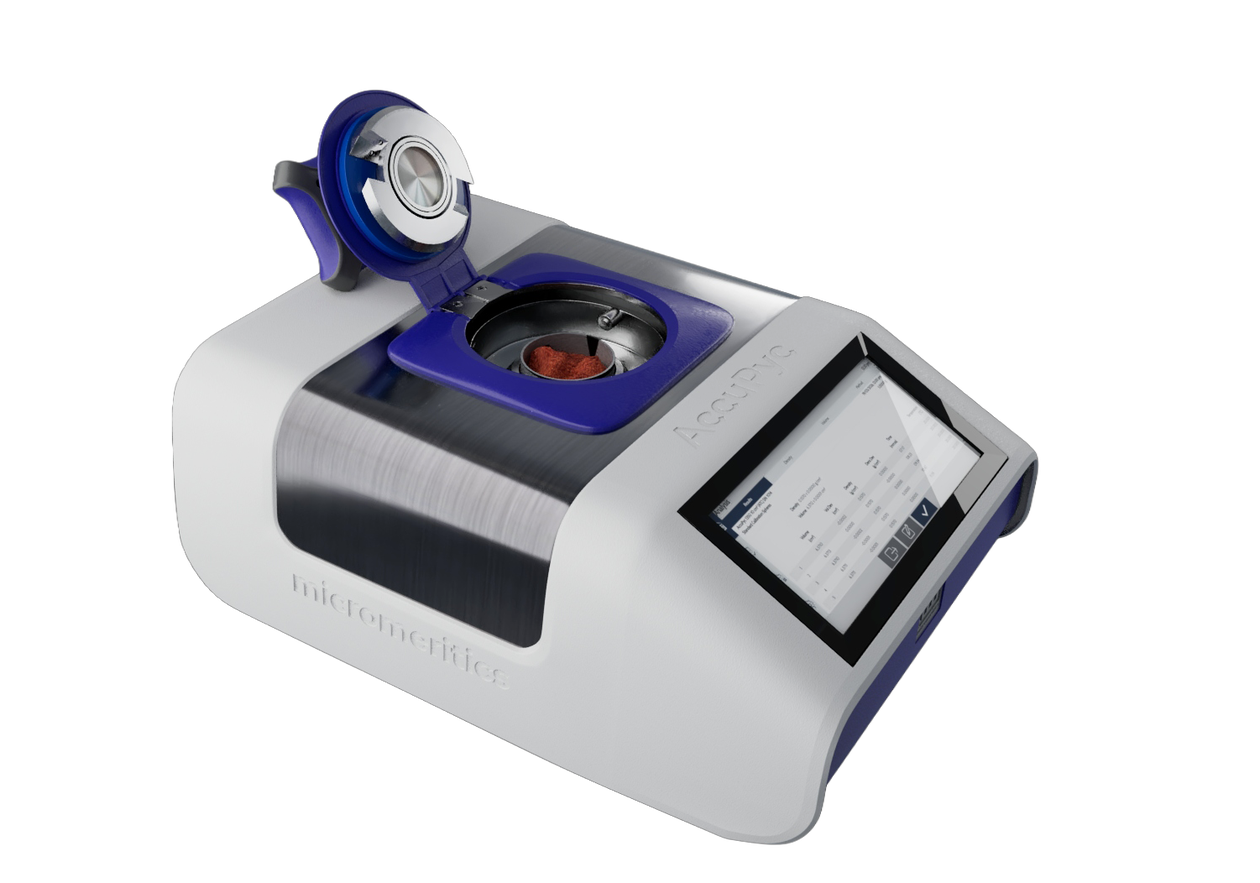
True density measurement where rapid analysis meets unrivalled precision. AccuPyc offers the fastest true density and most repeatable results - with measurement gas flexibility and standards-driven performance.
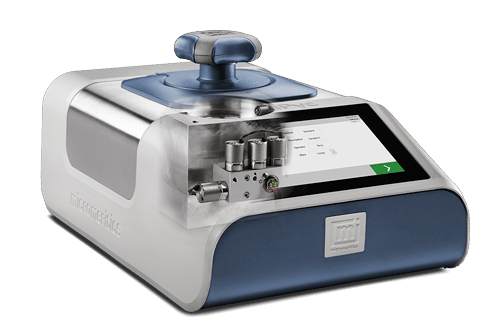
Unlocking precise and repeatable density measurement methods, the advanced gas pycnometer from Micromeritics offers a rapid, user-friendly solution for analyzing solids and semi-solids. As a high-performance density measurement instrument, the AccuPyc utilized across industries such as pharmaceuticals, batteries, metal powders, and more.
It features an optimized chamber design and flexible gas choices to ensure robust accuracy and traceability while simplifying workflows. Comprehensive data management and seamless integration empower laboratories to meet stringent standards and regulatory requirements with confidence. Downloadable resources and expert support further enhance reliability, making these systems a trusted choice for modern scientific environments.
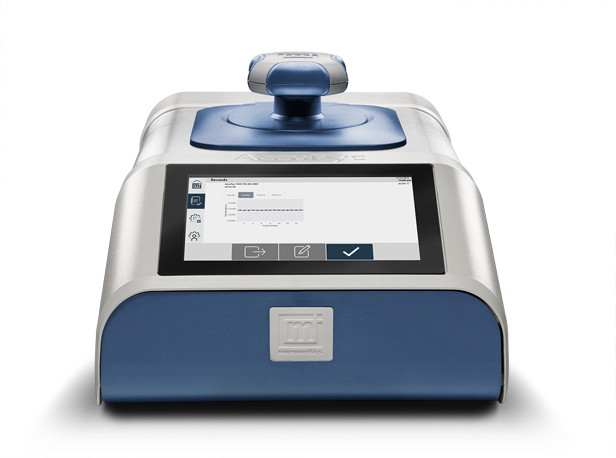
The fastest cycles, the easiest operation, and the highest accuracy, all in one AccuPyc.
Reference-first pressurization prevents the possibility of elutriation when measuring light and fluffy powders, keeping your system contaminant-free.
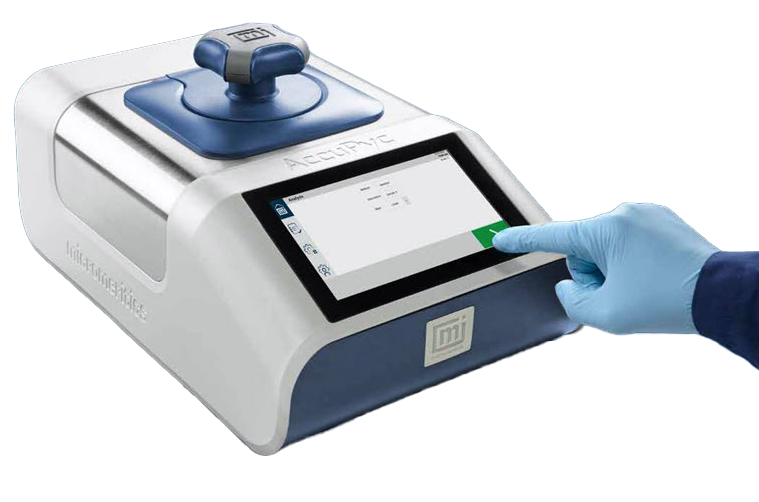
The Breeze Interface provides intuitive touch control to run, review, and report.
Keep the PC on or off the bench based on your space and requirements.
MIC Net + LIMS synchronize methods and results across instruments, enabling cross-site consistency and audit-ready traceability.
The density of battery cathode and anode materials is directly related to their porosity, which affects the amount of energy that can be stored per unit volume. Density is also an effective indicator of the purity and composition of the electrode materials, which is crucial for increasing battery capacity.
Monitor and control composition of API’s and excipients by measurement of product density. Differences in polymorphic, hydrated, and amorphous forms of products, as well as purity, can be detected through density measurements.
Track the purity of raw materials through density measurement. Detect the presence of occluded porosity developed during sintering processes that impact final product strength.
Determine total solids content of liquid coatings to predict coverage. Monitor density of dry pigments and powder coatings to verify composition. Detect density differences in cast films that indicate changes in crystallinity and mechanical performance.
Determine total pore volume and porosity of core samples to quantify total storage capacity. Quickly assess the composition of the solids used in drilling fluids.
Determine correct composition of catalyst supports and finished products including crystallinity, porosity, and formulation.
Determine the ratio of open and closed cell foams, which impacts heat transfer, gas transport, sound damping, mechanical energy dissipation, and buoyancy. Differentiate relative amounts of crystalline and amorphous phases of thermoplastic polymers. Design and produce composite materials with precise control of fiber loading, void content, mixing uniformity, and fiber impregnation.
Rendimiento
From scarce powders to large, irregular pieces, interchangeable cups and insert kits let you measure a broad volume range with full accuracy.
| Nominal | 10 cm3 / Insertos disponibles: 0,1cm3, 1cm3, 3,5cm3 |
| Temperatura | TS: 20 °C ± 0,025 °C |
| Precisión de volumen | 0.02% |
| Repetibilidad del volumen | 0.01% |
| Dimensiones | 26,5 cm x 43,0 cm |
| Supported languages | English |
| ASTM B923 | Polvos metálicos |
| ASTM C110 | Cemento |
| ASTM C604 | Materiales refractarios |
| ASTM C799 | Materiales nucleares |
| ASTM D2638 | Carbono |
| ASTM D2856 | Espuma |
| ASTM D4892 | Petróleo |
| ASTM D5550 | Suelo |
| ASTM D5965 | Revestimientos |
| ASTM D6093 | Revestimientos |
| ASTM D6226 | Espuma |
| ASTM D6761 | Catalizadores |
| ASTM D70 | Asfalto |
| ASTM D8171 | Fibras |
| DIN 66137 | Picnometría |
| ISO 12154 | Picnometría |
| ISO 18753 | Cerámica |
| ISO 4590 | Espuma |
| ISO 8130 | Revestimientos |
| USP <699> | Productos farmacéuticos |
| ISO 1183-3 | Plastics |
| Notas |
|
Volume insert kits offer ultimate volume flexibility. Conserve scarce samples with low-volume inserts or ensure representativeness for large/heterogeneous pieces. Simple kits extend the AccuPyc’s range without adding complexity.
The AccuPyc determines density using the gas displacement pycnometry method. In this method, a dry solid sample of known mass is placed into a sealed measurement chamber. A gas – normally Helium but alternatives are available – is introduced at a controlled pressure and allowed to expand into a reference chamber. By measuring the pressure change and applying Boyle’s law, the instrument calculates the volume of gas displaced by the sample. Knowing the sample mass, its density is calculated from the ratio of mass to the measured volume. As a result, AccuPyc measures true or skeletal density, using a volume that excludes open pores and interparticle voids, but includes closed pores within the solid.
There are several types of density:
Each type of density provides specific information that can be critical depending on the context of its application, such as material science, chemistry, engineering, or geology. Understanding the differences between these types of density is important for precisely characterizing materials and their behavior in various environments.
Yes, the AccuPyc from Micromeritics can measure volume displacement using gas pycnometry. With weight measurements of the sample, it can calculate density, and by relating this to the reference material (commonly water), it provides specific gravity data for solids.
<strong>Specific Gravity = Density of sample / Density of reference (typically water)</strong>
This makes AccuPyc suitable for applications requiring specific gravity measurements.
The AccuPyc gas pycnometer supports flexible gas selection in order to enhance workflow efficiency and improve material compatibility. AccuPyc is capable of operation with helium, nitrogen, argon, and dry air. Helium is the primary gas used for standards‑compliant skeletal density measurements, while nitrogen or argon may be used where permitted by the method and material characteristics.
| Gas | Precisión | Pore Penetration | Cost | Standards Acceptance |
|---|---|---|---|---|
| Helium | ★★★★★ | ★★★★★ | $$ | ★★★★★ |
| Nitrogen | ★★★★☆ | ★★★☆☆ | $ | ★★★★☆ |
| Argon | ★★★☆☆ | ★★☆☆☆ | $ | ★★☆☆☆ |
| Dry Air | ★★☆☆☆ | ★★☆☆☆ | $ | ★☆☆☆☆ |
| Estándar | Name | Industry |
|---|---|---|
| ASTM B923 | Standard Test Method for Metal Powder Skeletal Density by Helium or Nitrogen Pycnometry | Polvos metálicos |
| ASTM C110 | Standard Test Methods for Physical Testing of Quicklime, Hydrated Lime, and Limestone | Cemento |
| ASTM C604 | Standard Test Method for True Specific Gravity of Refractory Materials by Gas-Comparison Pycnometer | Refactory Materials |
| ASTM D2638 | Standard Test Method for Real Density of Calcined Petroleum Coke by Helium Pycnometer | Carbono |
| ASTM D4892 | Standard Test Method for Density of Solid Pitch (Helium Pycnometer Method) | Petróleo |
| ASTM D5550 | Standard Test Method for Specific Gravity of Soil Solids by Gas Pycnometer | Suelo |
| ASTM D5965 | Standard Test Methods for Specific Gravity of Coating Powders | Revestimientos |
| ASTM D6093 | Standard Test Method for Percent Volume Nonvolatile Matter in Clear or Pigmented Coatings Using a Helium Gas Pycnometer | Revestimientos |
| ASTM D6226 | Standard Test Method for Open-Cell Content of Rigid Cellular Plastics by Gas Pycnometer | Espuma |
| ASTM D6761 | Standard Test Method for Determination of Total Pore Volume of Catalysts and Catalyst Carriers | Catalizadores |
| ASTM D8171 | Standard Test Method for Density of Fibers | Fibras |
| ISO 12154 | Determination of density by volumetric methods—Gas pycnometry | Picnometría de gases |
| ISO 18753 | Fine ceramics (advanced ceramics, advanced technical ceramics)—Determination of absolute density | Cerámica |
| ISO 4590 | Rigid cellular plastics—Determination of the volume percentage of open and closed cells | Espuma |
| ISO 8130 | Coating powders (gas comparison pycnometer / liquid displacement pycnometer) | Revestimientos |
| ISO 1183 | Plastics—Methods for determining the density of non-cellular plastics—Part 3: Gas pycnometer method | Plastics |
| DIN 66137 | Determination of density of solids by gas pycnometry | Picnometría de gases |
| USP <699> | Density of Solids | Productos farmacéuticos |
| UL/CSA | The AccuPyc series complies with safety standards including UL-61010-1, UL-61010-2-081, and CAN/CSA-C22.2 No. 61010-2-081 | — |
| 21 CFR Part 11 | The AccuPyc III supports a 21 CFR Part 11 compliant workflow in regulated pharmaceutical environments | — |
Solicite un presupuesto o hable con un experto para obtener más información