
Micromeritics Physisorption Analyzer Isotherm Collection & Instrument Operation
Micromeritics produces several instruments used for determining physical adsorption isotherms. Most of these utilize the static (manometric) adsorption method, where the amount of gas adsorbed by the sample is determined from pressure and temperature measurements, and gas laws that account for the non-ideal behavior of the adsorptive. The amount of gas dosed onto the sample […]
Helium Effects on ASAP Series Micropore Analyses
Many microporous materials (such as carbons, zeolites, and molecular sieves) retain helium in their pore structures after being exposed to helium. The helium penetrates deep into the pores and takes a long time to diffuse from the material. A study was performed in which analyses were performed on a microporous carbon cloth exhibiting typical helium […]
Determining Free-Space Values for ASAP Series Micropore Analyses
Many microporous materials, such as zeolites and activated carbons, trap and hold helium in their complex pore structures for many hours after being exposed to helium. Helium trapped in micropores can interfere with the analysis at low pressures, causing an “S-shaped” curve at the lower end of the isotherm*. For this reason, it is recommended […]
Analysis Of Adsorbents For Direct Air Capture Of Carbon Dioxide Using Breakthrough Analysis
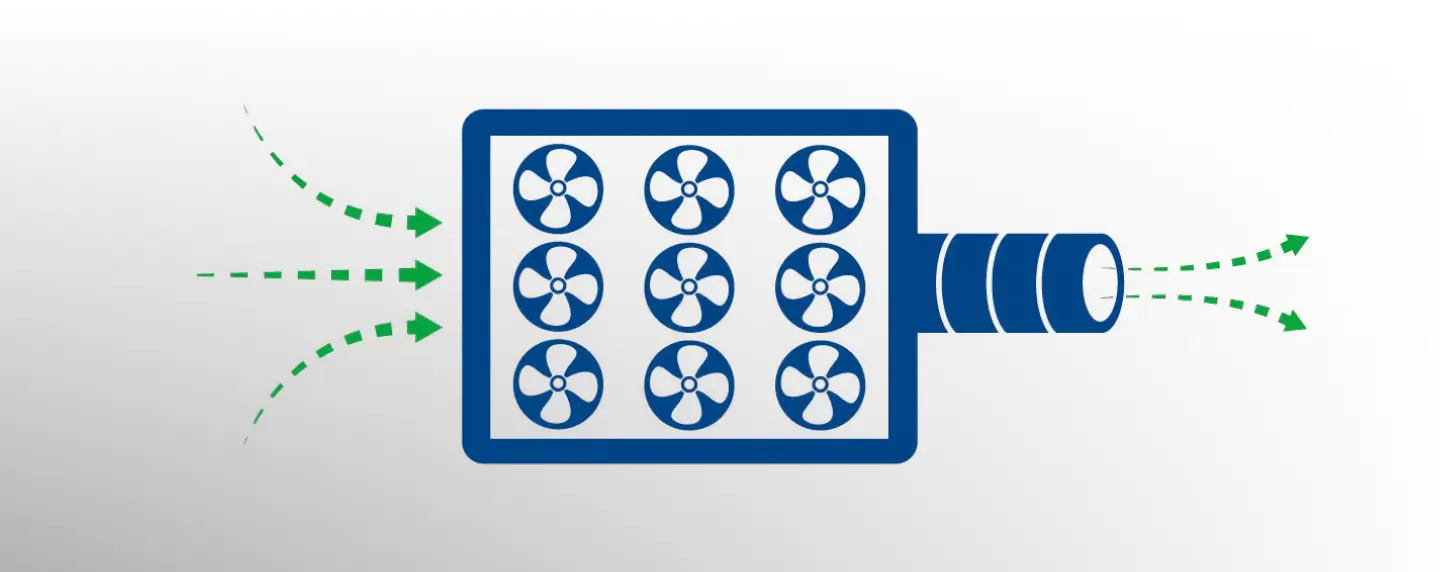
Introduction Anthropogenic carbon dioxide emissions have led to rising concerns of global warming. Carbon dioxide in the atmosphere is more efficient at trapping heat than the other components in the air, chiefly nitrogen (78%), oxygen (20.9%), and argon (0.9%). Carbon dioxide concentration in the atmosphere has risen from 280 ppm in the early 1900s to […]
Introduction To Ideal Adsorbed Solution Theory In Microactive:Predicting Multicomponent Adsorption

IntroductionWith the release of the MicroActive V6.0 and the 3Flex V6.0 software, multicomponentadsorption predictions using ideal adsorbed solution theory (IAST) have been added. IAST is apredictive technique developed by Myers and Prausnitz in 1965. It is used to predict mixed gasadsorption behavior from single component isotherms. This first release of IAST on V6.0 canbe used […]
Breakthrough Adsorption: Theory and Analysis of Adsorption in Zeolites and Metal-organic Frameworks (MOFs)
Breakthrough is the measurement of changing concentration versus time at the outlet of an adsorption column. Breakthrough allows users to assess their adsorbent media and calculate the quantity of gas, or vapor, adsorbed by an adsorbent under dynamic flow. Breakthrough has applications in separations, adsorption, pressure swing adsorption, and temperature swing adsorption. Breakthrough offers several […]
Building Robust Pharma Physical Properties Analysis
Broaden your understanding of solid form analysis. Traditionally a limited number of techniques have been used for physical properties analysis. Now, the opposite is becoming the issue, there are a multitude of good and reliable techniques, that can enrich solid form analysis. By looking at examples of porosity, surface area and powder flow analyses, we […]
Carbons, Zeolites and Molecular Sieves: Material Characteristics and Solutions for Characterization
Material characteristics and solutions for characterization. Activated and porous carbons along with zeolites and molecular sieves largely owe their industrial value to the ability to control the rate of transport of different molecules. This characteristic gives rise to a broad range of applications in gas separation, catalysis, the selective adsorption of pollutants and ion exchange. […]
Gas Sorption Characterization of Metal Organic Frameworks
Are you involved in Metal-organic frameworks (MOFs) for sorption applications? MOFs are candidates for many sorption applications due to their advantages of controllable chemical functionality, as well as ordered structure defined by virtually infinite combination of metal cluster and organic linker. Listen to Dr. Katharina Peikert, Technical Application Consultant with Micromeritics, speak about best practices […]
Direct Air Capture (DAC) of CO2 & the Important Role of Porous Materials in DAC Technology
Most current climate models suggest that limiting warming to less than 2°C will require large scale deployment of negative emissions technologies (NETs). NETs, which remove CO2 from the atmosphere, are projected to be needed at a scale of 10 Gt/y by 2050, yet today, virtually none of been deployed. NETs may be natural or technological, […]