Zetasizer Advance Series User Guide (English)
Version number: MAN0592-15-EN


The new Zetasizer Pro is your go-to instrument to measure a wide range of sample types and concentrations. It offers wide dynamic concentration capability and high sensitivity due to the Non-Invasive Back Scatter (NIBS) optical design. Measurement of particle size, molecular size, electrophoretic mobility, zeta potential and molecular weight can all be performed with ease.
The Adaptive Correlation feature enhances sample throughput by reducing measurement duration and providing greater sample knowledge. The deep learning-based data quality system gives you the confidence to know your data is the best it can be.
The optical filter wheel allows measurement of fluorescent samples without impacting overall instrument sensitivity.
Available in Blue Label and Red Label variants:
 Works with OmniTrust: Malvern Panalytical's compliance solution for the regulated environment
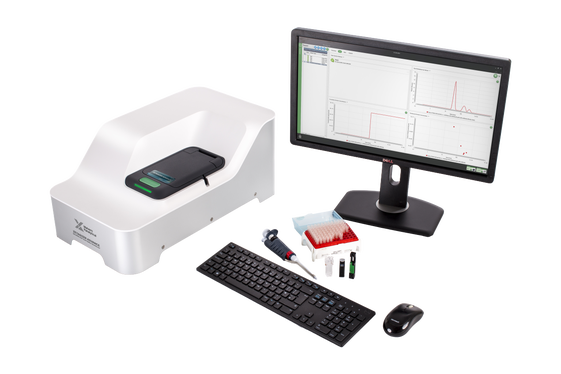
Dynamic Light Scattering (DLS), which measures particle and molecule size, from 0.3 nm to 10 µm
M3-PALS with Constant Current Mode, for zeta potential and electrophoretic mobility measurements
Electrophoretic Light Scattering (ELS), which measures the zeta potential of particles and molecules, indicating sample stability and/or propensity to aggregate
Non-Invasive Back Scatter (NIBS), optics for versatile, high sensitivity, particle and molecular size measurements and molecular weight measurements
Adaptive Correlation, for faster, more reproducible sizing measurements with less sample preparation
Deep learning-based data quality system, for assessment of any size data quality issues, with clear advice on how to improve results
Optical filter wheel with fluorescence filter, to allow measurement of fluorescent samples without impairing overall system sensitivity. Also includes polarization filters for DDLS measurements
A range of disposable and reusable cells are available to optimize the measurement in terms of sample volume and concentration
On-site upgradeability to Zetasizer Ultra, should your requirements change
The optional MPT-3 Autotitrator enables study of the effect of changes in pH
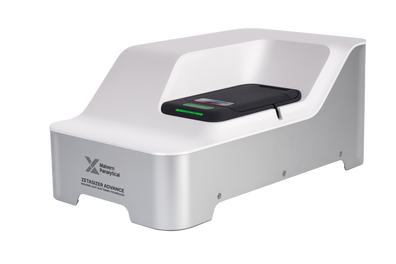
| Zetasizer Ultra | Zetasizer Pro | Zetasizer Lab | |
|---|---|---|---|
| Size Measurement Principle | Non-Invasive Back Scatter (NIBS)
Dynamic Light Scattering Dynamic Light Scattering (90° and 13°) Multi-Angle Dynamic Light Scattering (MADLS®) |
Non-Invasive Back Scatter (NIBS)
Dynamic Light Scattering |
Classical 90° Dynamic Light Scattering |
| Zeta Measurement Principle | ELS with M3-PALS and Constant Current Zeta Mode | ELS with M3-PALS and Constant Current Zeta Mode | ELS with M3-PALS and Constant Current Zeta Mode |
| Molecular Weight and B22 | Static Light Scattering (90° and 173°) | Static Light Scattering (173°) | Static Light Scattering (90°) |
| Optical Filter Wheel (Fluorescence/DDLS) | Yes | Yes | No |
| Low Volume Disposable Sizing Cell with Extended Size Analysis Support | Yes | No | Yes |
| MADLS® (High Resolution DLS) | Yes | No | No |
| MADLS® - Particle Concentration/Titer | Yes2 | No | No |
| 21 CFR Part 11 compliant software | Optional via Omnitrust | Optional via Omnitrust | Optional via Omnitrust |
| Size | |||
| Range2 | 0.3 nm to 10 μm | 0.3 nm to 10 μm | 0.3 nm to 10 μm |
| Minimum Volume | 3 μL | 12 μL | 3 μL |
| Zeta potential | |||
| Size Range | 3.8 nm to 100 μm | 3.8 nm to 100 μm | 3.8 nm to 100 μm |
| Minimum Volume3 | 20 μL | 20 μL | 20 μL |
1 Red Label only
2 10 um by default. Option to extend for Zetasizer Lab and Zetasizer Ultra coming soon
3 Patented Diffusion Barrier method in capillary cell
The Zetasizer Advance Range is used in many industries, including:
The Zetasizer Lab is an essential analytical tool for many academic laboratories worldwide, finding use in all applications where particle or molecular size and zeta potential analysis is required. The breadth of applications covered by Zetasizer systems, coupled with tens of thousands of scientific citations, have earned these instruments a central space in many scientific faculties.
Variations in molecule concentration, external temperature, level of agitation and time all impact the stability of biological molecules. Instabilities mainly result in denaturation and aggregation of the molecule through which they can lose their biological function , elicit an immune response and consequently limit its therapeutic viability. Factors affecting therapeutic efficacy and immunogenicity therefore need to be monitored throughout the development pipeline especially at early stages to de-risk the biological drug molecule and limit late-stage failures. The Zetasizer range provides high quality, stability indicating data for biological drug molecules in a short time frame, enabling this measurement to be implemented throughout the development pipeline.
Zetasizer systems are used to analyze particle size and zeta potential to improve the appearance and taste of foods, drinks and flavorings, and optimize dispersion and emulsion stability to extend product shelf life and improve product performance.
Zetasizer measurements of nanoparticle size distribution, dispersion properties, stability and propensity to aggregate are crucial to the design of new nanomaterials. The very large surface area of such materials may result in novel physical and chemical properties, such as increased catalytic activity, improved solubility or unexpected optical or toxicological behavior.
Paint, ink and coating formulations must be stable to keep them in an optimum state over time without change or aggregation. Particle size and zeta potential, measured by the Zetasizer instruments, play important roles in determining a product’s properties, such as dispersibility, color, strength, finish, durability and shelf life.
The correct particle size and zeta potential can help ensure the production of effective therapeutics, delivered safely. Zetasizer systems are used to characterize the stability and quality of dispersions, emulsions and creams, reducing formulation time and speeding new products to market.
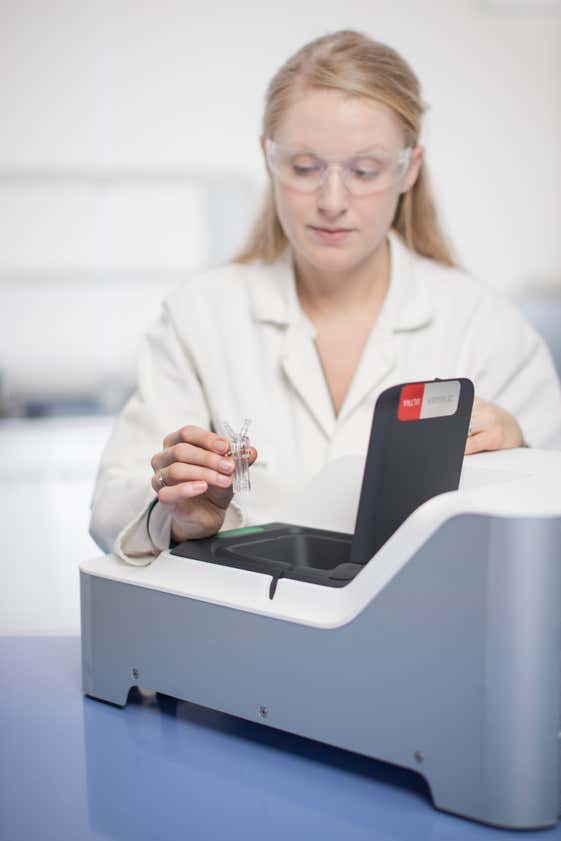
The Zetasizer Advance Range is suitable for a wide range of applications, including:
Sizing of colloidal silica is a critical requirement. This is easily and reproducibly measured using the Zetasizer Lab Blue Label.
Titanium dioxide use is wide-ranging. When used in paints or inks, agglomerate or aggregate formation can diminish product performance. The Zetasizer Pro Blue Label, used alongside the MPT‑3 Autotitrator, characterizes the impact of salt concentration on the stability of TiO2 and identifies the most stable pH region.
The strength of ceramics is linked to particle size, and the Zetasizer Ultra Blue Label is ideally placed to measure this. Al2O3 samples are often made of differently-sized particles which can easily be identified using MADLS. In this 0.1% w/v sample, the two particle size populations would not be distinguishable with a single angle DLS measurement.
For protein researchers, early access to characterization data can be a challenge, due to low sample volumes. This is easily overcome using the Zetasizer Lab Red Label with the capillary cell to confirm that samples meet quality requirements and that production and purification processes are optimized.
Photoluminescent C-dots are considered safer alternatives to quantum dots. Measuring fluorescent samples by DLS can be challenging due to additional photons emitted by the fluorophore. Available with NIBS on Zetasizer Pro Red Label, a filter removes this interference to provide accurate and reliable data.
Monitoring viral concentration is important during development and production optimization. By using the Multi-Angle DLS (MADLS) based particle concentration measurement in the Zetasizer Ultra Red Label, both the size distribution and titer of the virus can be measured within a few minutes.
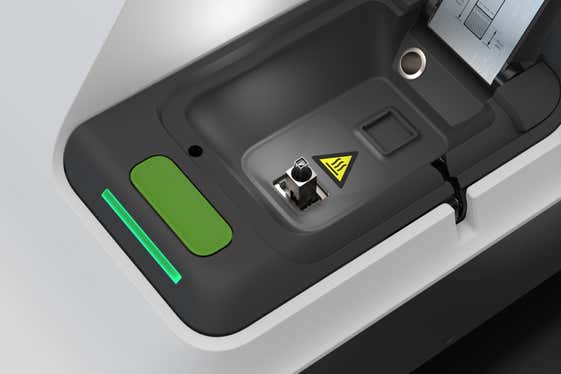
The Zetasizer is one of the most user-friendly pieces of equipment I've used so far in my career. The instrument itself is easy to set up and operate. It has demonstrated high sensitivity for size measurements, and the datasets I've collected are consistent and reproducible."
Victoria Makal — University of Florida College of Medicine
| Measurement principle | Non-Invasive Back Scatter (NIBS)
Dynamic Light Scattering |
|---|---|
| Measurement angle | 173°, 13° |
| Measurement range | 0.3 nm - 10 μm |
| Minimum sample volume | 12 μL |
| Concentration range | Minimum sample concentration:
Blue Label: 0.2 mg/mL 15 kDa Protein
Red Label: 0.1 mg/mL 15 kDa Protein
Maximum sample concentration: (3)
40% w/v
|
| Measurement principle | Mixed-Mode Measurement phase analysis light scattering (M3-PALS) |
|---|---|
| Size range | 3.8 nm – 100 μm |
| Minimum sample volume | 20 μL |
| Concentration range | Red Label: 1 mg/mL (5) to 40% w/v (6)
Blue Label: 10 mg/mL (5) to 40% w/v (6)
|
| Sample conductivity range | Maximum: 260 mS/cm |
| Measurement principle | Static Light Scattering with Debye Plot |
|---|---|
| Molecular weight range | 300 Da - 20 MDa |
| Accuracy | +/- 10% |
| Detector | Avalanche Photodiode |
|---|---|
| Laser safety | He-Ne (633 nm)
Blue label: 4 mW Max
Red label: 10 mW Max |
| Temperature control range | 0 °C - 120 °C 7 |
| Dimensions (W, D, H) | 322 mm x 565 mm x 245 mm |
| Weight | 19 kg |
| Power | AC 100-240 V, 50-60 Hz, 4.0 A |
| Power consumption | Max 100 W, Typical 45 W |
| Ambient conditions | +10°C to +35°C, 35 to 80% RH (Non-condensing) |
| Interface | USB 2.0 or higher |
| International standards | International Standards Organization
ISO22412:2025
ISO13099-2:2025
US Pharmacopoeia (USP)
430 – Particle Size Analysis by Dynamic Light Scattering
432 – Determination of Zeta Potential by Electrophoretic Light Scattering
729 – Globule Size Distribution in Lipid Injectable Emulsions
1153 – Drug Products Containing Nanomaterials
1154 – Liposome Drug Products
1430 – Analytical Methodologies Based on Scattering Phenomena – General
ASTM
D4001
E2490
E2865
E3247 |
| Notes | 1 - Water as dispersant
2 - Indicative data available for particle sizes greater than 10 μm when using Extended Size Range analysis and low volume disposable sizing cell accessory
3 - Sample dependent
4 - Using patented diffusion barrier technique
5 - Measured using 15 kDa protein
6 - Measured using bile acid
7 - Dry nitrogen cell purge required for temperatures below dewpoint
8 - Accuracy 0.1°C at 25°C, 0.2°C at 0°C, 0.5°C at 90°C
|
|---|
Empowering scientists, one automated test at a time

Viscosity measurement with speed, simplicity and accuracy.

Automate your pH titrations

Eliminate sample cross contamination between zeta potential measurements using a completely disposable cell.

Reusable solvent resistant cell.

Save time and effort by measuring zeta potential with little or no dilution.

Disposable plastic micro cuvette, for size measurement at 173° (NIBS) optics only

Glass cuvette for use with dip cell

Glass cuvette for batch measurements

Disposable polystyrene cuvettes

Low-volume quartz batch cuvette for size and molecular weight measurements.

Unleash the potential of your data
Until now, instrument data has too often been stuck in manual records, spreadsheets or site-specific servers. By connecting your Zetasizer to our Smart Manager and continually analyzing instrument data in the cloud, you can unleash its full potential. This is just one of our digital solutions that are part of Malvern Panalytical's Smart Manager.
Get your new Zetasizer up and running faster when you choose to smart install.
With comprehensive resources to help you quickly and safely set-up and verify the performance of your new instrument, there’s no need to wait for an engineer to do it for you. What’s more, smart install presents a new training opportunity as you receive full access to exclusive training material.
How does it work?
When you follow the step-by-step video instructions, you could be up and running within 90 minutes of delivery of your new Zetasizer.
You don't need any specific skills or knowledge to perform a smart installation. Simply follow the instructions provided.
Everything needed to get started is provided with your new instrument – all you need is an internet connection to access the online training.
Exclusive e-learning content
Resources to get you up and running quickly and with confidence include:
Version number: MAN0592-15-EN
Version number: MAN0592-15-ZH
Version number: MAN0593-10-EN
Version number: MAN0604-05-EN
Version number: MAN0593-08-ZH
Version number: MAN0593-08-JA
Version number: MAN0593-06-FR
Version number: 07
Version number: MAN0593-05-EN
ZS Xplorer 4.2.0 extends coverage of OmniTrust, our regulated environment solution, to cover Sample Assistant functionality.
Adds persistence for Sample Assistant sessions and upgrades License Manager to 2.0.
Please read the SUN for full details.
ZS Xplorer 4.1.0 release further extends Zetasizer Sample Assistant integration with additional features and quality of life improvements.
ZS Xplorer 4.1.0 introduces support for sample storage thermoblocks.
General improvements to Sample Assistant robustness and ability to pause running sessions added.
ZS Xplorer 4.0.0 is the first version to support the new Zetasizer Sample Assistant automated particle size and Zeta potential sample changer. Small updates to Smart Manager components are also included.
Please Note: OmniTrust (regulated environment) users will not be able to access Sample Assistant as the feature does not currently support OmniTrust.
See SUN for full details.
Maintenance release, updates to key services and addition of Titration summary data logs.
See SUN for full details.
ZS Xplorer version 3.3 extends OmniTrust support to the Studies features of the main application. Previously OmniTrust users were prevented from accessing Studies to prevent un-audited events. From 3.3 OmniTrust users can now access Studies for Molecular Weight and associated parameters with permissions and auditing of events within the Studies features.
Note that Studies by their nature are intended for advanced users and to be flexible in their analysis. Users not requiring Studies features can still prevent access to these features using permissions in OmniAccess.
Version 3.3 also addresses a few minor bug fixes.
See SUN for full details.
ZS Xplorer 3.2.2 has the following updates:
Software re-branded to Malvern Panalytical brand
Minor bug fixes - one of which may have prevented instrument connection
Bug fix for OmniTrust users that meant editing of records was possible, even when user permission for this action was disabled (recommended update for OmniTrust users currently on ZS Xplorer 3.2.1.)
Updated Toluene calibration routine to prevent incorrect reporting of issues with calibration.
See SUN for full details.
ZS Xplorer 3.2.1 adds Smart Instrument enrollment - the first step in bringing Zetasizer into Malvern Panalytical's Smart Manager services.
Several installer improvements have been made to reduce ZS Xplorer requirements around .NET and WebView2 components.
We have also added ability to edit peak thresholds for size measurements and refinements on CSV exporting from parameter tables.
See SUN for full details.
ZS Xplorer version 3.2.0 adds upper and lower display range configuration for Size/MADLS & Particle Concentration measurements.
Introduces Data Quality Advice for MADLS & Particle Concentration measurements.
Adds further Trend analysis improvements and bug fixes.
Extends Japanese and Chinese localization to Studies and Data Quality Advice.
Adds speed and robustness improvements to Scattering standard measurements.
Other improvements and bug fixes.
See SUN for full details.
ZS Xplorer version 3.1.0 extends studies and concentration trend measurements to support the Zetasizer Advance Lab models and also adds the capability to perform concentration trends in either back or side scatter on Zetasizer Advance Ultra models. Concentration trends also now supports setting of measurement temperature and adds display of R2 value to tables and graphs.
Exporting of data to CSV file from graphs and tables in Concentration trends and from Parameter and Statistic tables in Analyze views has been introduced.
Data quality advice for Zeta potential measurements has been further refined to provide users with better diagnosis of sample/measurement issues.
Exporting a study now provides an option to include the results data for transfer of the complete study between data repositories.
Various bug fixes, see software update notification for details.
ZS Xplorer version 3.0.0 introduces studies and concentration trend measurements for the determination of molecular weight by static light scattering and kD by dynamic light scattering. Note: This first release does not support Zetasizer Lab or OmniTrust users. Auto averaging for Zeta, MADLS and Particle concentration has also been added along with other quality of life features and bug fixes. See SUN for details.
ZS Xplorer version 2.3.1 introduces post-analysis averaging for Zeta, Particle Concentration and MADLS size measurements. Zeta mobility parameters and graphs have
been added, as well as a count rate meter and
localization for Chinese (Simplified) and Japanese language support.
Important: This version supports OmniTrust 1.4.0; OmniTrust users should upgrade their installation to 1.4 if upgrading to ZS Xplorer 2.3.1.
ZS Xplorer version 2.3.0 introduces post analysis averaging for Zeta, Particle Concentration and MADLS size measurements. Zeta mobility parameters and graphs have also been added, as well as a count rate meter.
Important: This version supports OmniTrust 1.4.0; OmniTrust users should upgrade their installation to 1.4 if upgrading to ZS Xplorer 2.3.0.
details.
Smart Instruments: Cloud Service Software update
OmniTrust software update v1.7a
OmniAccess
OmniTrail
More information can be found in the Release and Installation Notes.
OmniAccess
OmniTrail
More information can be found in the Release and Installation Notes.
![[Technical support services cut corner engineer icon.jpg] Technical support services cut corner engineer icon.jpg](https://dam.malvernpanalytical.com/d0c70f08-9e0d-4e18-867a-b25d00ea46ae/Technical%20support%20services%20cut%20corner%20engineer%20icon_Original%20file.jpg)
|
Unmatched uptime and performance
Malvern Panalytical instruments are built to last and good maintenance and care ensure continued peak performance for many years to come.
|
|
![[Training and expertise cut corner presenter icon.jpg] Training and expertise cut corner presenter icon.jpg](https://dam.malvernpanalytical.com/1bad9bc7-37d8-4ce9-bda4-b25d00ea443a/Training%20and%20expertise%20cut%20corner%20presenter%20icon_Original%20file.jpg)
|
Advanced analysis and actionable insights
|
|
![[Product support cut corner cog icon.jpg] Product support cut corner cog icon.jpg](https://dam.malvernpanalytical.com/0e7d58ab-5b41-4676-98dc-b25d00ea45f5/Product%20support%20cut%20corner%20cog%20icon_Original%20file.jpg)
|
Easy start and streamlined routine operations
|
|
![[Service team and contact cut corner agent icon.jpg] Service team and contact cut corner agent icon.jpg](https://dam.malvernpanalytical.com/02a7577c-c20c-4a3b-9a1a-b25d00ea45e3/Service%20team%20and%20contact%20cut%20corner%20agent%20icon_Original%20file.jpg)
|
Want to speak to a service expert or find the services that are just right for you?
Reach out to our experts and evaluate your services needs and business risks by answering a few questions around the usage of your Malvern Panalytical instrument.
|
|
|
*Please note that the exact details of our services and their availability are determined by a variety of customer-specific factors, such as product type, product configuration, or location. |
||
 Powered by Bioz See more details on Bioz
![[PN13012_2520_CLV_Photography_MP_JN.jpg] PN13012_2520_CLV_Photography_MP_JN.jpg](https://dam.malvernpanalytical.com/1b3bd0b0-1f31-43bf-a862-ae5100d0f47e/PN13012_2520_CLV_Photography_MP_JN_Original%20file.jpg)